
Testing Summary
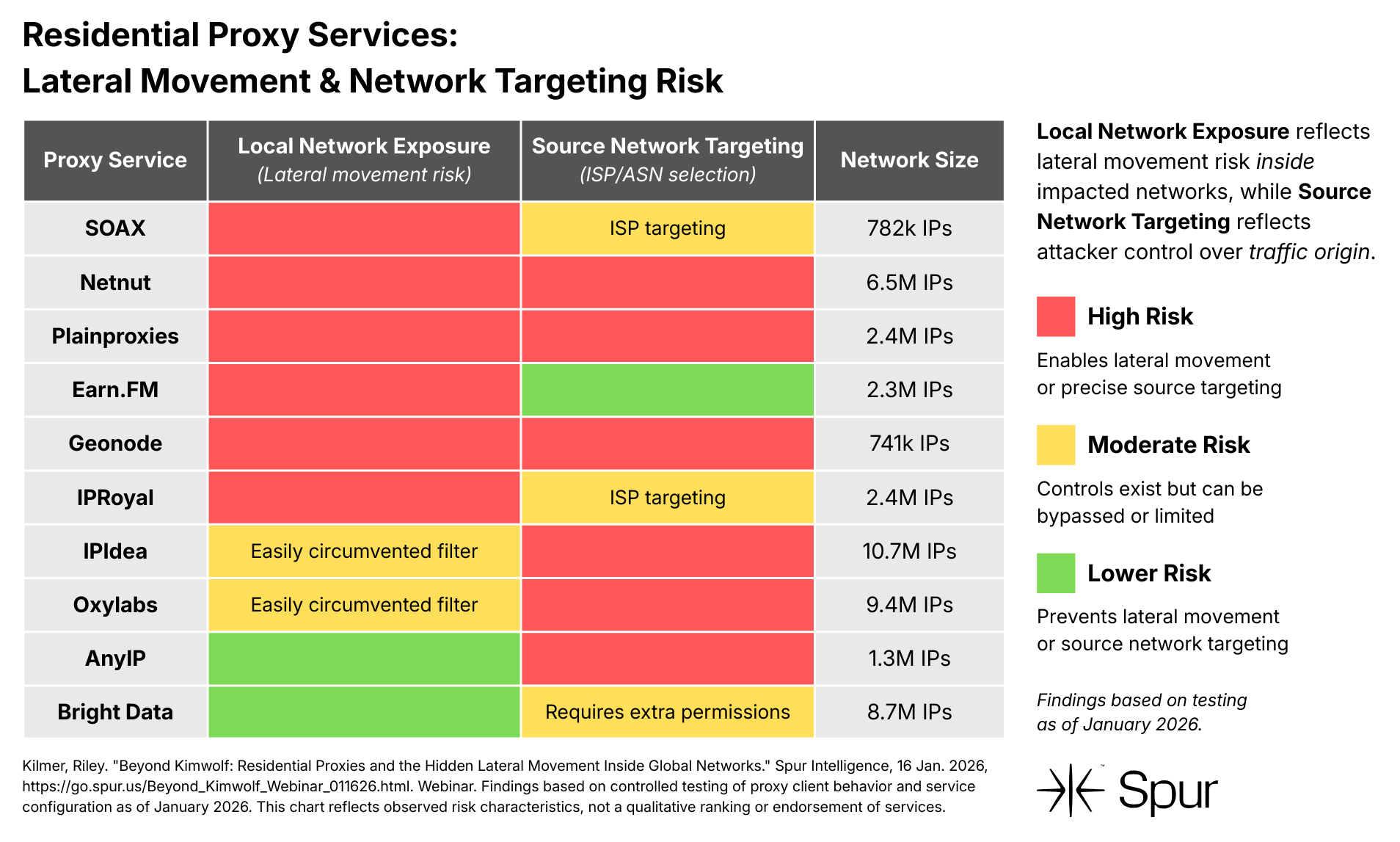
Spur Intelligence Labs tested 11 of the top residential proxy services in 2019 and again in January 2026 to determine whether they allowed LAN access — a risk that enables attackers to bypass perimeter defenses and perform lateral movement from within trusted networks. During this testing, Spur uncovered pervasive risks tied to LAN access across several major providers.
Key Takeaways
Key findings from the testing:
- The majority of proxy service providers enable LAN access, exposing local networks to lateral movement.
- Some providers offer controls to prevent lateral movement, but controls were either limited or easily bypassed.
- Bright Data was one of four providers that prevented lateral movement.
Although restricting LAN access reduces one attack surface, it changes the provider’s risk profile in ways teams should reflect in scoring and mitigations. Organizations should carefully investigate the risk of enabling lateral movement in local networks when evaluating residential proxy services.
Conclusion: Bright Data is an example of a proxy provider that does not allow LAN access (as of January 2026), in contrast to most residential proxy services.